Picture this: you post a single Instagram Story recommending a skincare serum you actually love, add one tracked link, go to bed, and wake up to a commission notice sitting in your inbox. No brand deal negotiation. No sponsored post contract. No awkward back-and-forth with a marketing manager. Just your genuine recommendation, a little bit of tech working quietly in the background, and money landing in your account while you slept. That, in a nutshell, is the promise behind what is affiliate marketing for influencers — and it’s quickly become one of the most reliable, scalable ways for content creators to earn a living from the audience they’ve already built.

If you’ve ever wondered how creators with even modest followings manage to earn steady income without constantly chasing brand deals, affiliate marketing is very often the answer. It’s not flashy, it doesn’t require a huge following, and it doesn’t demand that you become a salesperson. It simply asks that you keep doing what you already do — sharing products, opinions, and recommendations — while getting paid every time that content leads to a sale.
What Is Affiliate Marketing for Influencers, Exactly?
At its core, affiliate marketing is a performance-based partnership between a creator and a brand. Instead of being paid a flat fee upfront for a post (as with traditional sponsorships), an influencer earns a commission only when their audience takes a specific action — usually making a purchase, but sometimes signing up for a trial, downloading an app, or filling out a form.
Here’s how the mechanics work in practice. A brand runs an affiliate program, often through a platform like ShareASale, Impact, Awin, Amazon Associates, or a direct in-house system. The influencer applies to join, gets approved, and receives a unique tracking link or discount code tied specifically to them.
Whenever a follower clicks that link, a small tracking cookie is placed in their browser. If that follower buys the product within a set window — anywhere from 24 hours to 90 days, depending on the program — the sale is attributed to the influencer, and a commission is paid out.
This is the piece that makes affiliate marketing so attractive to creators of every size. You don’t need a million followers. You don’t need a media kit that rivals a magazine’s. You need an audience that trusts your opinion enough to click a link, and a product genuinely worth recommending.
That combination is often more powerful coming from a creator with 8,000 highly engaged followers than from one with 800,000 disengaged ones.
How Affiliate Marketing Actually Works for Content Creators
Understanding the moving parts helps clarify why this model has exploded in popularity across TikTok, Instagram, YouTube, and blogs alike.
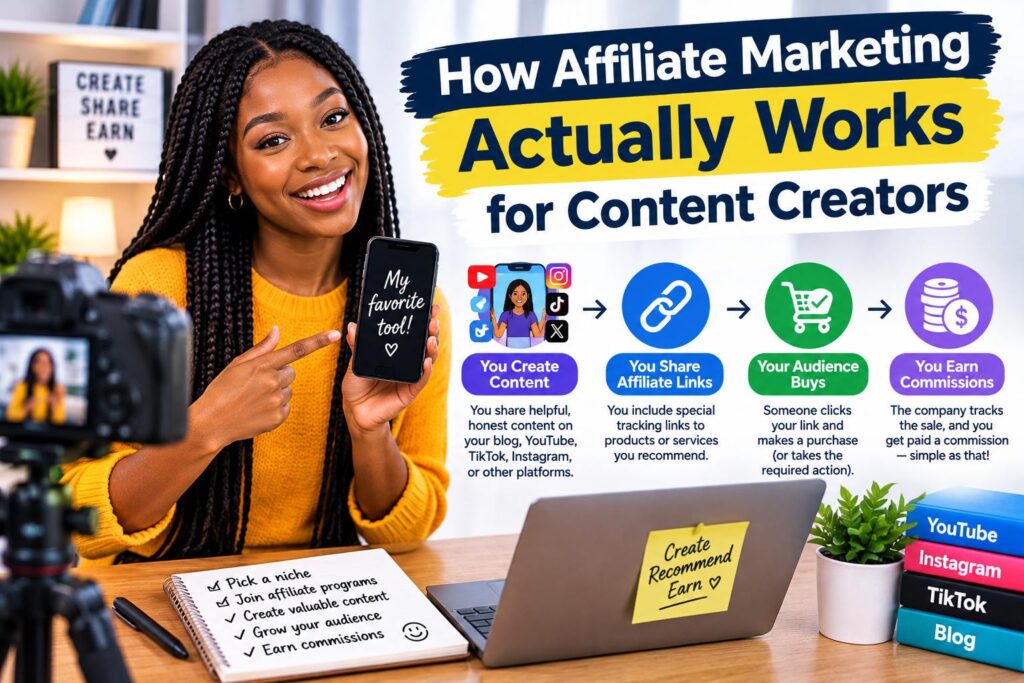
- Joining a program. Influencers sign up either directly with a brand’s affiliate program or through an affiliate network that aggregates hundreds of brands in one dashboard. Networks are convenient because they let creators manage multiple partnerships, track earnings, and request payouts from a single place
- Getting a unique link or code. Once approved, the creator receives a personalized URL (think: yourbrand.com/?ref=yourname) or a discount code (SAVE10YOURNAME). This is the tracking mechanism that ties every sale back to the specific creator responsible for it.
- Creating content around the product. This is where influencers shine. Whether it’s a TikTok “get ready with me” video featuring a product, a YouTube tutorial, an Amazon storefront, or a blog post with embedded links, the content itself does the heavy lifting of building desire and trust before the click ever happens.
- Driving traffic through the link. The audience clicks the link in a bio, swipes up on a Story, taps a product tag, or clicks through from a blog post. This single click is what starts the tracking clock.
- Earning a commission. When a sale (or other qualifying action) happens within the cookie window, the influencer earns a percentage — typically anywhere from 3% to 50%, depending on the industry, product margin, and program terms. Digital products, software subscriptions, and online courses tend to offer the highest commission rates, sometimes 30% or more, while physical products usually sit in the 5-15% range.
Why Brands Love Working With Affiliate Influencers
From a brand’s perspective, affiliate marketing removes much of the financial risk associated with influencer partnerships. Instead of paying a flat fee and hoping for results, brands only pay when a sale actually happens. This performance-based structure means smaller brands with limited marketing budgets can still tap into influencer reach, while larger brands can scale their affiliate programs across hundreds or thousands of creators without ballooning their upfront spend.

This is a big part of why affiliate marketing for influencers has grown so quickly, even as some traditional flat-fee sponsorship budgets have tightened. Brands get measurable ROI, creators get a passive income stream tied directly to their content’s performance, and everybody avoids the guesswork of “did this sponsored post actually work?”
The Real Appeal: Passive Income That Compounds Over Time
One of the most underrated aspects of affiliate marketing is how it turns old content into an ongoing income stream. A sponsored post typically earns money once, on the day it’s posted, and then quietly disappears into the feed.
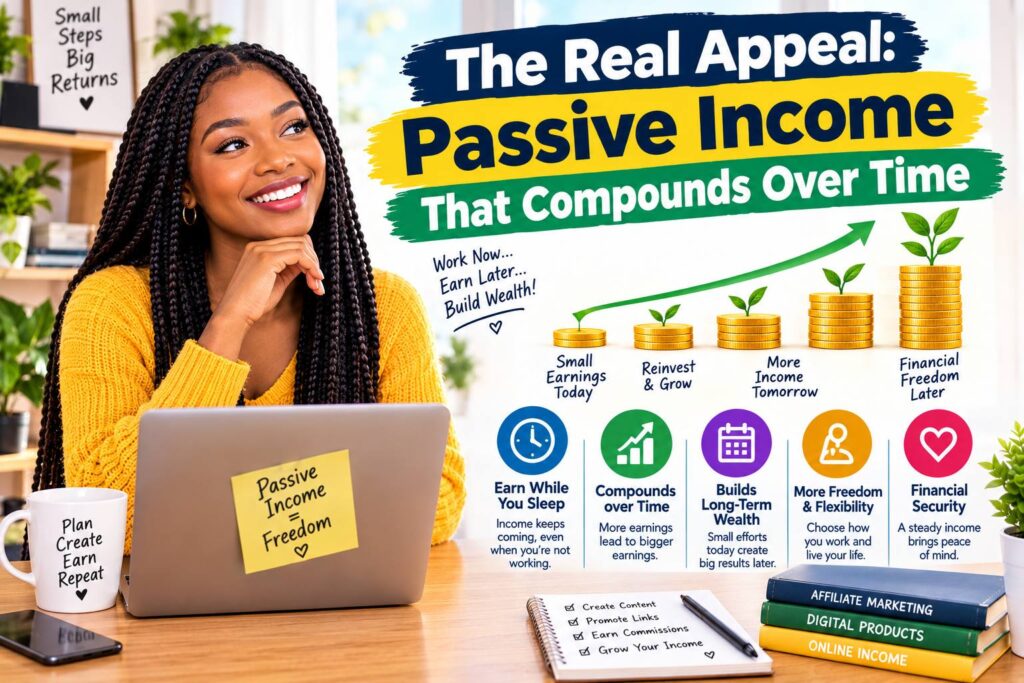
An affiliate link embedded in a blog post or a YouTube video description, on the other hand, can keep generating commissions for months or even years after publication, especially if the content ranks well on search engines or continues to surface in recommendation algorithms.
This compounding effect is exactly why so many creators are shifting a portion of their content strategy toward evergreen, search-friendly formats — product roundups, “best of” lists, tutorials, and comparison posts — specifically because these formats keep earning long after the initial publish date. A single well-optimized blog post comparing skincare routines, for example, can quietly generate commissions every single month with zero additional effort from the creator.
Choosing the Right Affiliate Programs as an Influencer
Not all affiliate partnerships are created equal, and choosing wisely matters just as much as the content itself. A few factors worth weighing:
Relevance to your niche. Promoting products your audience actually wants matters more than chasing high commission percentages on irrelevant items. Trust erodes fast when recommendations feel random.

Commission structure and cookie duration. A 30-day cookie window gives you far more earning potential than a 24-hour one, since not everyone buys the instant they click.
Payout thresholds and schedules. Some networks hold payments until you hit $50 or $100 in earnings; others pay out monthly regardless of amount.
Brand reputation. Partnering with brands that deliver quality products protects your credibility. A bad product experience reflects on you, not just the brand.
Available creative assets. Programs that provide product images, sample scripts, or landing pages make content creation faster and easier.
Popular starting points for new affiliate marketers include Amazon Associates (broad product range, lower commissions), LTK (formerly RewardStyle, built specifically for fashion and lifestyle influencers), ShareASale and Awin (large networks covering countless niches), and direct brand programs that often offer better rates than third-party networks.
Common Platforms Where Affiliate Marketing Thrives
While affiliate marketing works across virtually every platform, some formats lend themselves particularly well to it:
Instagram and TikTok rely heavily on Stories with swipe-up links, “link in bio” tools like Linktree or Beacons, and increasingly, native shopping tags that let followers purchase directly from a post or video.

YouTube benefits from link placement in video descriptions, pinned comments, and verbal call-to-actions during the video itself, which tend to convert especially well because viewers are already engaged for several minutes.
Blogs remain one of the strongest long-term affiliate channels because search engine traffic is free, ongoing, and highly intent-driven — someone searching “best budget laptop for students” is often much closer to purchasing than someone scrolling a feed.
Email newsletters offer a direct, algorithm-free line to an audience that has already opted in, making them one of the highest-converting affiliate channels available to creators who maintain a subscriber list.
Getting Started: A Simple Path Forward
For any creator asking themselves what is affiliate marketing for influencers and whether it’s worth pursuing, the entry point is refreshingly low-barrier. Start by auditing the products and tools you already use and genuinely recommend.
Apply to their affiliate programs, or check if they’re listed on major networks. Weave your unique links naturally into content you’re already planning to create rather than forcing new content purely for the sake of a partnership. Track which links and content formats convert best, then double down on what’s working.
It’s worth noting that consistency matters more than perfection here. A creator who posts affiliate-linked content regularly, even in small ways, will typically out-earn one who posts a single heavily-promoted piece and then goes quiet for months. The algorithm and the compounding search traffic both reward steady output.
Common Mistakes Influencers Make With Affiliate Marketing
Even experienced creators stumble in a few predictable ways. Over-promoting is the biggest one — flooding every post with affiliate links erodes trust and makes an audience tune out recommendations entirely.
Another common mistake is failing to disclose affiliate relationships, which isn’t just an ethical issue but a legal one in many countries, including FTC requirements in the United States that mandate clear disclosure whenever a financial relationship exists.
Choosing products purely for commission rate rather than genuine fit with the audience is another frequent misstep. Followers can usually tell when a recommendation feels forced, and that erosion of trust tends to hurt long-term earnings far more than any single missed commission would.
Finally, many creators give up too early, expecting significant income within the first few weeks. In reality, affiliate marketing for influencers tends to reward patience: it often takes months of consistent content and traffic-building before commissions become meaningful, particularly for creators relying on search-driven platforms like blogs or YouTube.
The Bottom Line
So, what is affiliate marketing for influencers when you strip away the jargon? It’s simply getting paid for recommendations you’re already making, powered by a tracked link and a shared incentive between creator and brand. It rewards authenticity over aggressive selling, patience over instant results, and consistency over sporadic bursts of effort.
For creators looking to diversify income beyond one-off brand deals, it remains one of the most accessible, sustainable, and scalable paths available — regardless of whether your audience numbers in the thousands or the millions.