Somewhere right now, someone with zero followers, zero coding skills, and zero marketing budget is earning a commission simply because they linked to a coffee maker they genuinely liked. That’s the quiet magic of Amazon’s affiliate program, and it’s exactly why so many people searching for how to start affiliate marketing with Amazon for beginners end up staying in the game long after their first tiny payout.

Unlike most affiliate opportunities that demand a huge audience or industry connections before you’re even considered, Amazon Associates opens its doors to almost anyone with a website, blog, or social presence — making it one of the most accessible entry points into affiliate marketing that exists today.
If you’ve been curious about earning money online but felt overwhelmed by complicated funnels, expensive courses, or the idea that you need to be an “influencer” first, Amazon’s program strips all of that away.
You don’t need a niche brand, a media kit, or years of experience. You need a product you can genuinely recommend, a place to publish that recommendation, and a link. That’s essentially the whole starting point.
How to Start Affiliate Marketing With Amazon for Beginners: The Basics
Amazon Associates is Amazon’s official affiliate program, and it works on a simple premise: you promote products sold on Amazon using unique tracked links, and whenever someone clicks your link and makes a purchase, you earn a small commission — typically between 1% and 10%, depending on the product category.
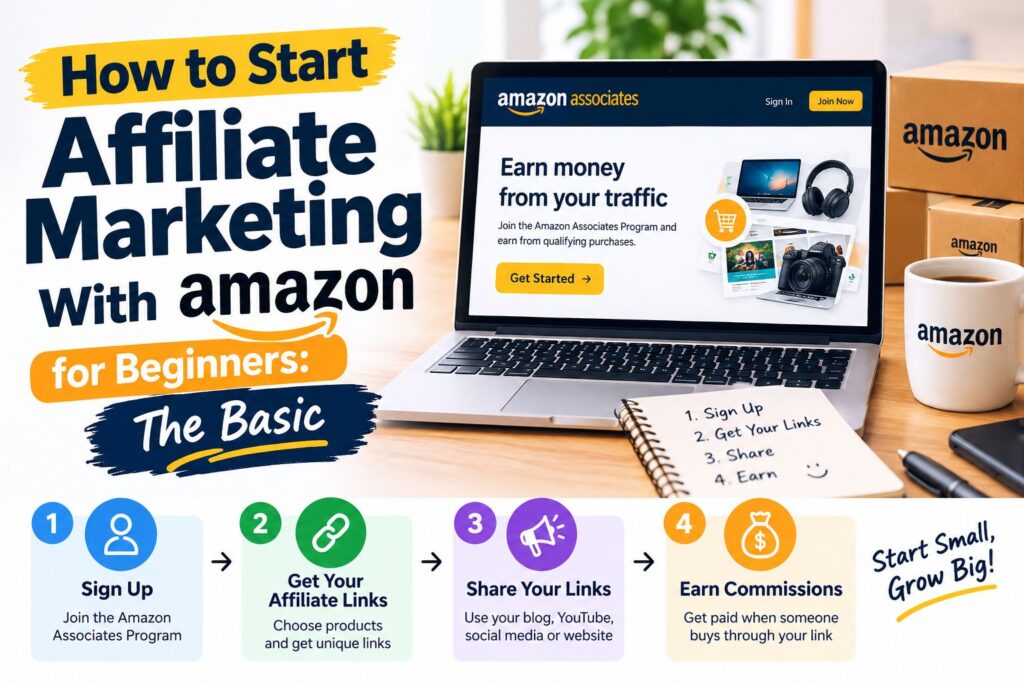
The commission rates might sound modest compared to other affiliate programs, but Amazon’s enormous product catalog, trusted checkout process, and near-universal brand recognition make it remarkably easy to convert clicks into actual sales.
For anyone researching how to start affiliate marketing with Amazon for beginners, the appeal usually comes down to three things: low barrier to entry, an almost limitless range of products to promote, and the trust factor of Amazon’s brand, which removes a lot of the hesitation shoppers might feel buying from an unfamiliar site.
Step 1: Set Up a Platform to Publish Content
Before applying to Amazon’s program, you need somewhere to actually place your affiliate links. Amazon requires applicants to have an active website, blog, YouTube channel, or approved social media presence with genuine content already published. A bare-bones page with no posts typically gets rejected.
Popular options for beginners include:
A blog built on WordPress or a similar platform, ideal for product reviews, “best of” roundups, and how-to guides that naturally incorporate product recommendations.
A YouTube channel, well-suited for unboxings, product comparisons, and tutorial videos where a description box link feels natural.
A niche website focused on a specific category, such as home fitness equipment, pet supplies, or kitchen gadgets, which tends to rank better in search engines than a broad, unfocused site.
Whichever platform you choose, aim to have at least a handful of genuine posts or videos published before applying, since Amazon reviews your content quality as part of the approval process.
Step 2: Apply to the Amazon Associates Program
Once you have a platform with some content live, head to the Amazon Associates website and complete the application. You’ll need to provide your website or channel URL, describe the type of content you create, and explain how you plan to drive traffic to Amazon. Be specific and honest here — vague or generic answers are one of the most common reasons beginner applications get rejected.
After submitting your application, Amazon typically requires you to generate at least three qualifying sales within 180 days to remain an active associate, so it helps to have a content and promotion plan ready before you’re approved, not after.
Step 3: Generate Your Affiliate Links
Once approved, you’ll gain access to Amazon’s SiteStripe toolbar, which appears right on Amazon product pages when you’re logged into your associate account. This lets you generate a tracked affiliate link for virtually any product on Amazon with a single click — no coding or technical setup required, which is a big part of why this program remains such a popular answer to how to start affiliate marketing with Amazon for beginners specifically.
You can generate:
Text links to embed directly in blog posts or articles.
Image links for product photos with your tracking code built in.
Native shopping ads, which display rotating product recommendations that adjust based on the page’s content.
Step 4: Create Content That Naturally Features Products
This is where the real strategy comes in. Simply dropping random links into content rarely converts. Instead, successful beginner affiliates build content specifically designed around genuine product recommendations.
A few formats that consistently perform well:
Product review posts that dive deep into a single item — its pros, cons, use cases, and who it’s best suited for. Detailed, honest reviews tend to rank well on search engines and convert visitors who are already close to a purchase decision.
“Best of” listicles, such as “10 Best Blenders Under $100” or “Best Budget Laptops for College Students,” which capture people actively comparing options and ready to buy.
How-to guides and tutorials that recommend specific tools or products needed to complete a task, weaving affiliate links in naturally as part of a genuinely useful resource.
Comparison articles pitting two or three similar products against each other, which tend to attract highly motivated shoppers doing final research before purchasing.
Step 5: Drive Traffic to Your Content
Links and content mean nothing without an audience to see them. Beginners exploring how to start affiliate marketing with Amazon for beginners often underestimate how much traffic generation matters compared to the affiliate mechanics themselves.
Search engine optimization (SEO) remains one of the most sustainable traffic sources, since a well-ranked blog post can keep earning commissions for months or years with no ongoing effort. Focus on long-tail keywords with clear buying intent, since these tend to convert far better than broad, generic search terms.
Social media promotion, particularly on Pinterest, Instagram, and TikTok, can drive quick bursts of traffic, especially for visually appealing products.
YouTube, especially for product demonstrations, unboxings, and tutorials, tends to build long-term, compounding traffic similar to blog SEO, since videos continue surfacing in search and recommendations long after publishing.
X
Email marketing, once you’ve built even a small list, offers a direct, algorithm-independent channel to resurface product recommendations to an audience that has already opted in.
Common Mistakes Beginners Make With Amazon Affiliate Marketing
Even with such a low barrier to entry, plenty of beginners stumble in predictable ways. One of the biggest mistakes is promoting products the creator has never used or doesn’t genuinely believe in, purely because they carry a higher price tag or commission. This often shows in the content quality and erodes trust over time.
Another common error is ignoring Amazon’s strict disclosure requirements. The FTC requires clear disclosure whenever a financial relationship exists, and Amazon itself requires specific disclosure language on any page using its links. Skipping this isn’t just risky — it can get an account suspended entirely.
Many beginners also underestimate how short Amazon’s cookie window is — just 24 hours for most products, meaning a visitor needs to complete their purchase within a day of clicking your link for you to earn a commission. This makes content that targets people close to a buying decision (like comparison posts and reviews) far more effective than content aimed at casual browsers.
Finally, a lot of beginners give up too quickly. Because Amazon’s commission rates are relatively low per sale, meaningful income usually requires either significant traffic volume or a steady base of published content compounding over time. Expecting fast results is one of the most common reasons people abandon the model before it has a chance to work.
Realistic Expectations for Beginners
It’s worth being honest about the timeline here. Anyone genuinely researching how to start affiliate marketing with Amazon for beginners should expect a gradual build rather than overnight income. Early months often bring modest earnings — sometimes just a few dollars — while content accumulates and search rankings slowly improve.
Creators who stick with consistent publishing, however, often see meaningful compounding: older posts continue ranking and converting even as new content is added, gradually building a passive income stream that requires less and less ongoing effort per dollar earned.
The Bottom Line
Amazon Associates remains one of the most beginner-friendly on-ramps into the broader world of affiliate marketing, precisely because it removes so many of the usual barriers: no large audience required, no complicated application process, and access to a virtually unlimited product catalog trusted by millions of shoppers.
Success still requires genuine strategy — quality content, smart keyword targeting, and consistent publishing — but for anyone wondering how to start affiliate marketing with Amazon for beginners, the path forward is refreshingly straightforward: pick a platform, apply, generate your links, and start creating content around products you can honestly stand behind.